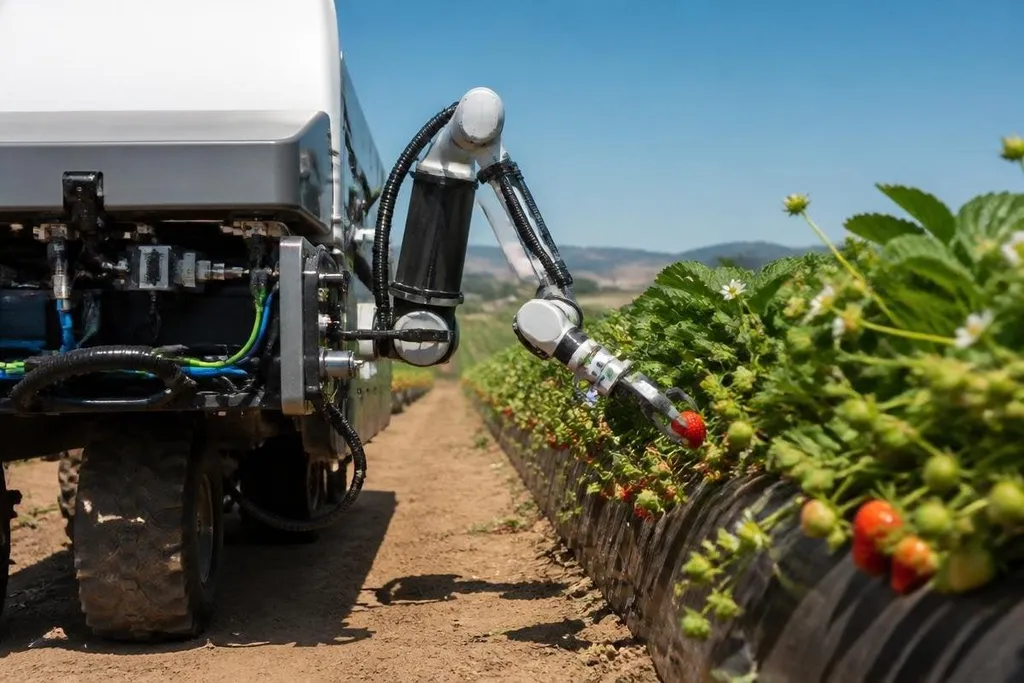
Harvesting is one of the hardest farm jobs to automate because the robot must find ripe produce, reach it without damage, and work around plants that rarely grow in the same shape.
That makes harvesting robots important for a clear reason: they must deal with the crop as it is, not as a fixed part on an assembly line.
- The task: find and remove produce without bruising it.
- The machine: cameras, software, a robotic arm, and a tool for picking.
- The test: repeat the job across changing light, plant shapes, and crop positions.
Why harvesting is difficult
A factory robot works in a controlled space. Its part arrives in a known position, and the robot can repeat the same motion. A field gives the machine uneven ground, moving leaves, changing light, and produce hidden behind stems.
That is why harvesting robots need machine vision. This means cameras and software that help the robot identify an object and estimate where it sits. The robot then plans a path for its arm and chooses how to touch the produce.
The picking tool also matters. A hard clamp may damage soft fruit, while a weak grip may drop it. A cutter may work for one crop, but another crop may need a pull, twist, or careful release from the plant.
The robot must also decide when to act. Colour can help show ripeness, but colour alone may not tell the machine whether fruit is blocked, damaged, or ready to remove. That decision affects the value of the whole system because a missed item still needs a person to pick it.
What the robot changes on a farm
Harvesting robots can let farm operators use the same machine for repeated work across a picking area. The benefit depends on the crop, the tool, the field layout, and how often the machine needs a person to step in.
A robot that finds and picks produce can also collect information about the crop. Its cameras may record where produce appears, while its control system can log failed picks or areas that need another pass. Those records can help an operator see where the machine works well and where human labour is still needed.
This matters because harvesting is tied to timing. Produce can lose value when it stays on the plant too long, but a robot that works slowly may not cover enough ground. The useful measure is not whether the robot can pick one item. It is how many acceptable items it picks during a real work period.
A harvest trial needs the crop, picking rate, test date, and human work left after each pass. Harvesting robotics coverage can place those details beside the machine’s result, giving you a clearer basis for judging whether it can keep up when weather or crop shape changes.
The limits are still practical
A harvesting robot needs more than a working arm. It needs a way to move through rows, avoid people and equipment, handle dust and moisture, and return for charging or service. Each added task can make the machine heavier, slower, or harder to maintain.
The crop itself sets the hardest limit. Produce can hang at different heights and angles, while leaves can hide the part the robot needs to reach. A system trained for one crop may need new software and a different picking tool before it works on another.
Human support also changes the cost. If a worker must guide the robot through many picks, clear blocked plants, or sort damaged produce, the robot has not removed the full labour task. It may still help with tiring work, but the farm needs to measure that gain rather than assume it.
I’d judge a harvesting robot by accepted produce per work period, not by a smooth video of one successful pick.
A practical buying check
Before a farm tests or buys a harvesting robot, check these points:
- Name the crop and tool: confirm that the system is built for the produce and the way it must be removed.
- Count accepted picks: record usable produce, damaged produce, missed items, and time spent on each group.
- Test changing light: run the system across the lighting conditions found in the real picking area.
- Measure human help: log every task a worker must do during the robot’s run.
- Check movement: confirm that the robot can reach the crop without harming plants or blocking farm traffic.
- Price the service work: include charging, cleaning, repairs, software changes, and tool replacement.
That check leads to a better question than “Can the robot harvest?” Ask how much usable produce it can collect, how much help it needs, and which parts of the job remain manual.
Harvesting robots are becoming more important because farms need machines that can deal with variable work, not only repeat fixed motions. The next useful proof will come from longer field runs that show accepted picks, worker input, and service needs across a full harvest period.